Uma Crônica Paulista
It was my husband’s first time in São Paulo. Although it was June, our winter, I hadn’t intended for him to experience record-breaking cold, which in my tropical homeland is in the low 50s. With the beach and pool out of the question, I took him to museums and parks, many of which are downtown. This is a region we call Centro, or center, the city’s old heart. However, as the famous song goes, there is no love in SP, and if there is no love, then at some point the heart must have ceased beating.
To get there, we took the subway to the historic Luz station, a century-old building of Victorian architecture and intricately designed cast iron columns and dark red railings. For frequent American subway travelers, the absence of any smell of urine was striking.
It was the middle of the workday, so traffic was light. By an arched, ornamental window I saw a restless man in rags with dilated pupils, speaking to a woman wearing nothing but undergarments: neon green boyfriend panties, a sports bra, a hot pink fanny pack. I noticed her grab an apple from it and take a bite. I shivered in my coat. It was as if her exposed skin invited the cold into my bones. A loud whistle announced another train on the way, and I grabbed my husband’s hand.
I took him to the Pinacoteca, R$85 tickets each, paid for in dollars. When we returned, hours later, I saw her briefly again among a much larger crowd, peak hours. The man she had been speaking to was gone. We locked eyes for a tiny moment, and I averted my gaze, ashamed. All that was left to do was let the flux carry us to the train, so we wouldn’t be trampled by all the bodies. The city never stops, and if you do, even if it’s just to take a bite off an apple, you are left behind.
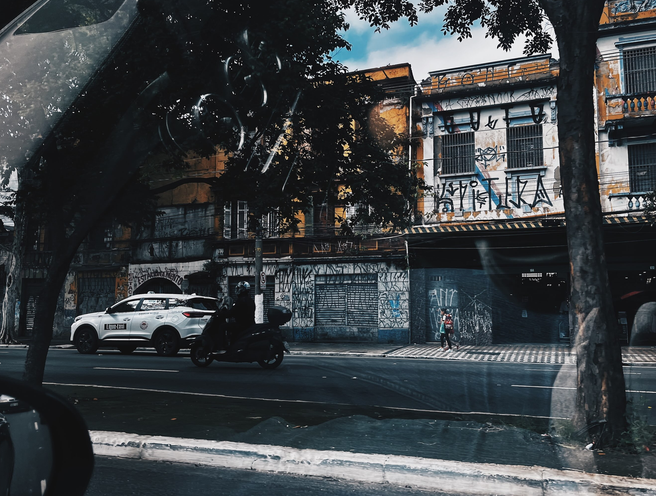
On the walk home from the subway I got lost in the sight of the abandoned buildings with exposed, unfinished brick and mortar, the background to my childhood, and for the first time I noticed in one of them the intricate window railings and neogothic patterns hiding behind the graffiti. My mind circled back to the station, and all the people inside and around it who were high, hungry, cold, ignored. The city kept its stations clean, but what about its decaying buildings, its neediest people?
Later that night, in our hotel, I asked my husband what he’d thought of Centro. He mentioned the subway. “Never seen anything like it.”
“It’s very clean,” I said, defensive. “Much nicer than New York’s, I think. It doesn’t smell.”
He had never been to New York to compare. He looked out the window. “There were so many people.”
“There were. What would you like to do tomorrow?” I asked, drowning in my shame.
“It’s up to you, really.”
“I think I’d rather stay inside. The cold…”
“Yeah,” he took my hand into his, releasing me from the burden of speaking my real thoughts. “That’s fine.”
Silence. I will never know her heart, I will never know our cruel city’s. Like the history of our beautiful, abandoned buildings, it all eludes me.


Leave a Reply